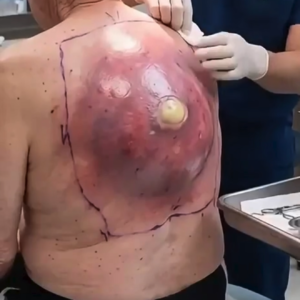
The following morning, Harold sat nervously in the dermatologist’s office while the doctor examined the raised lump on his upper back. It was larger than an ordinary pimple and had occasionally become tender. After asking how long it had been present and whether it had changed, the doctor explained that one possibility was an epidermoid cyst. These cysts can develop beneath the skin and are sometimes mistaken for stubborn pimples. They often grow slowly and may remain harmless for years, although some become inflamed or infected. The doctor reassured Harold that a lump’s appearance alone wasn’t enough to establish a diagnosis and that any unusual or changing growth deserved proper evaluation.
Harold listened carefully as the dermatologist explained the difference between a typical pimple and a deeper skin cyst. Pimples usually develop when hair follicles become clogged and inflamed, while epidermoid cysts are enclosed sacs beneath the skin that contain keratin and other cellular material. Because cysts can resemble other skin conditions, a clinician may recommend further assessment or removal when appropriate. The doctor also warned Harold against squeezing or attempting to drain the lump at home. Doing so could cause irritation, introduce infection, or make the problem worse. Harold admitted that he had considered asking his wife to squeeze it, believing that would solve everything.
After discussing the options, Harold agreed to have the growth evaluated and treated appropriately. In this imagined story, the lump was confirmed to be a benign epidermoid cyst and was removed during a minor procedure. The doctor explained how to care for the area while it healed and what symptoms might require follow-up. Harold was relieved, but he also felt slightly embarrassed that he had ignored the bump for so long. His daughter reminded him that the important thing was that he had finally sought medical attention. “Dad,” she said with a smile, “you spent your whole life looking after us. Now it’s our turn to remind you to look after yourself.”
A few weeks later, Harold was back in his favorite chair, enjoying his morning coffee without the discomfort that had bothered him for years. The experience taught him something valuable: even a small change in the skin deserves attention when it persists, grows, becomes painful, bleeds, or changes appearance. Not every bump is dangerous, and many turn out to be harmless, but guessing at home isn’t a substitute for a professional examination. Harold began encouraging his friends to take their health seriously instead of dismissing every unusual symptom as part of getting older. Sometimes, caring for yourself begins with something as simple as asking a doctor about a lump you’ve been ignoring.