A Forest Surprise
Imagine walking in the woods, maybe off the trail or searching for mushrooms, when suddenly you see it: a hand clawing its way out of the ground. Gnarled, black fingers pushing through the leaves—your brain instantly screams horror movie. But it’s not a body. You’ve just encountered one of the forest’s strangest fungi: Dead Man’s Fingers.
Meet Xylaria polymorpha
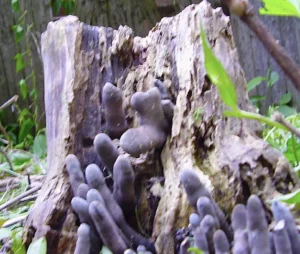
The scientific name, Xylaria polymorpha, is less terrifying than its appearance. On a damp autumn afternoon, I spotted a rotting stump with charcoal-colored, finger-like structures. They spread disturbingly like a human hand. Curiosity won—I crouched to inspect them.
What Are These Things?
They’re fungi, but not the storybook kind with red caps and white spots. Dead Man’s Fingers look like burnt sausages or roots halfway to becoming a corpse’s hand. They grow on dead hardwoods—stumps or roots—and feed on decaying material.
Unlike parasitic fungi, they do not harm living trees. They are saprophytes, breaking down dead wood and recycling nutrients into the forest soil.
Appearance and Growth
Young fungi are soft, pale, and slightly fleshy. Older specimens dry to black, sometimes with lighter or white tips, enhancing the hand-like appearance. They are small—about 1–2 inches tall—but often cluster together, forming the iconic finger shapes.
Edible? Definitely Not
While technically not poisonous, they are woody and bitter, like chewing a stick. Dried or ground, they offer no culinary value. Take a photo, but don’t consider tasting them.
Safe to Touch
Dead Man’s Fingers won’t hurt you. They don’t ooze toxins or cause rashes. Still, always wash your hands after handling, especially during spore season or if prone to allergies.
Where and When to See Them
They appear from late summer into fall and decay slowly, sometimes even poking through snow. Look near hardwoods—oak, beech, maple—around rotting stumps or roots in shady, damp areas.
Why Do They Look Like Fingers?
It’s accidental. Their elongated shape helps with spore dispersal, and the lighter tips can resemble fingernails. Nature isn’t trying to be scary—it just grows this way.
Why They Matter
Dead Man’s Fingers play a vital role in the ecosystem. By breaking down tough hardwood, they enrich the soil and support new plant growth. Even the most grotesque organisms can serve a crucial purpose.
A Creepy, Fascinating Encounter
Next time you hike and spot what looks like a skeleton hand emerging from the ground, don’t flee. Snap a photo, Google it, and meet Xylaria polymorpha. Dead Man’s Fingers: creepy, weird, and ecologically amazing.