Growing tensions between the United States and Iran have intensified concerns about a possible wider conflict. President Donald Trump acknowledged the possibility of retaliatory attacks on American soil, warning that war inevitably brings casualties. Ukrainian President Volodymyr Zelensky has also expressed fears that Russia’s invasion of Ukraine could represent the beginning of a broader global confrontation. Meanwhile, a YouGov survey found that approximately 45 percent of Americans believe another world war could occur within the next decade.
As concerns about nuclear conflict increase, researchers have examined which American regions might face greater risks. Analyses highlighted by Newsweek suggest that several East Coast and Southeastern states could be less likely to experience immediate nuclear strikes. These include Maine, Vermont, New Hampshire, Georgia, Florida, and the Carolinas. However, such assessments depend on potential military targets and hypothetical attack scenarios.
States including Montana, Wyoming, Colorado, Nebraska, and the Dakotas could face greater exposure because of nearby strategic missile installations. Military experts warn that these facilities might become priority targets during a nuclear confrontation. Nevertheless, major cities, military bases, and essential infrastructure elsewhere could also face serious threats. Ultimately, no American state can be considered completely safe during a large-scale nuclear war.

Related Posts

I Stopped a Man From Leaving With a Crying 3-Year-Old — He Sued Me for $250,000, Then a Young Woman Stood Up in Court
At sixty-seven, I thought my most exciting days were behind me. After losing my husband, I took a part-time job as a store greeter in Fort Smith,…

A Hollywood Legend With an Unforgettable Legacy
Hollywood is remembering the extraordinary life and career of Robert Duvall, who passed away at the age of 95. Known for his commanding screen presence and remarkable…
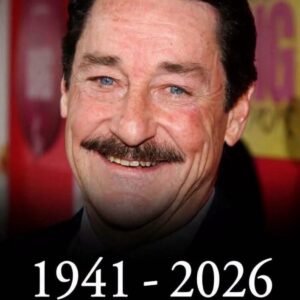
The Legendary Voice Behind Optimus Prime and Eeyore
With heavy hearts, we say goodbye to the legendary voice behind characters who became such a big part of our childhoods. Legendary voice actor Peter Cullen, whose…

REMEMBERING A HOLLYWOOD LEGEND: TOM SKERRITT DIES AT 93
Legendary American actor Tom Skerritt has passed away at the age of 93, leaving behind an extraordinary legacy in film and television. Best known for his unforgettable…

ASHLEY JUDD AT 58: A REFRESHING CONVERSATION ABOUT NATURAL BEAUTY AND AGING
As women in Hollywood grow older, more actresses are challenging traditional beauty standards and showing that confidence and elegance have no age limit. Among the familiar faces…

A Pimple on the Back of Your Head? Here’s What It Could Mean — And When You Shouldn’t Ignore It
Have you ever felt a small, painful bump on the back of your head while washing your hair or brushing your fingers across your scalp? At first,…